Pregnancy & Birth Preparation
Pregnancy brings incredible changes to your body—and pelvic floor physical therapy can help you prepare for those changes. Whether you're experiencing discomfort during pregnancy or simply want to prepare your body for labor, delivery, and recovery, pelvic health physical therapy can help you feel informed, prepared, and confident.
At Core Pelvic Health & Wellness, I provide individualized care throughout pregnancy to help you understand your changing body, address common pregnancy-related concerns, and prepare for birth and postpartum recovery.
Why pelvic floor physical therapy during pregnancy?
You don't have to wait until something hurts.
Pregnancy places increasing demands on your pelvic floor, abdominal muscles, spine, hips, and overall movement system. Pelvic health physical therapy can help you understand these changes and prepare your body for the demands of pregnancy, labor, delivery, and recovery.
Whether this is your first pregnancy or you've been pregnant before, an individualized evaluation can help you identify areas that may benefit from strengthening, mobility work, relaxation, education, or improved coordination.
What can pelvic floor PT help with during pregnancy?
You may benefit from pelvic health physical therapy if you are experiencing:
Pelvic pain
Low-back pain
Hip pain
SI joint pain
Pubic symphysis pain
Round ligament discomfort
Tailbone pain
Urinary leakage
Urinary urgency or frequency
Constipation
Pain with intercourse
Pelvic pressure or heaviness
Difficulty exercising comfortably
Abdominal discomfort
Difficulty with sleep or positioning
Diastasis recti concerns
Difficulty with movement or changing positions
Preparing your body for labor
Birth preparation is more than strengthening your pelvic floor.
During labor and delivery, your pelvic floor needs to be able to contract, relax, lengthen, and coordinate with your breathing and abdominal muscles.
Learning how to relax and lengthen the pelvic floor can be just as important as learning how to strengthen it.
Birth preparation may include:
Pelvic floor relaxation and lengthening
Breathing strategies
Coordinating breathing with pelvic floor movement
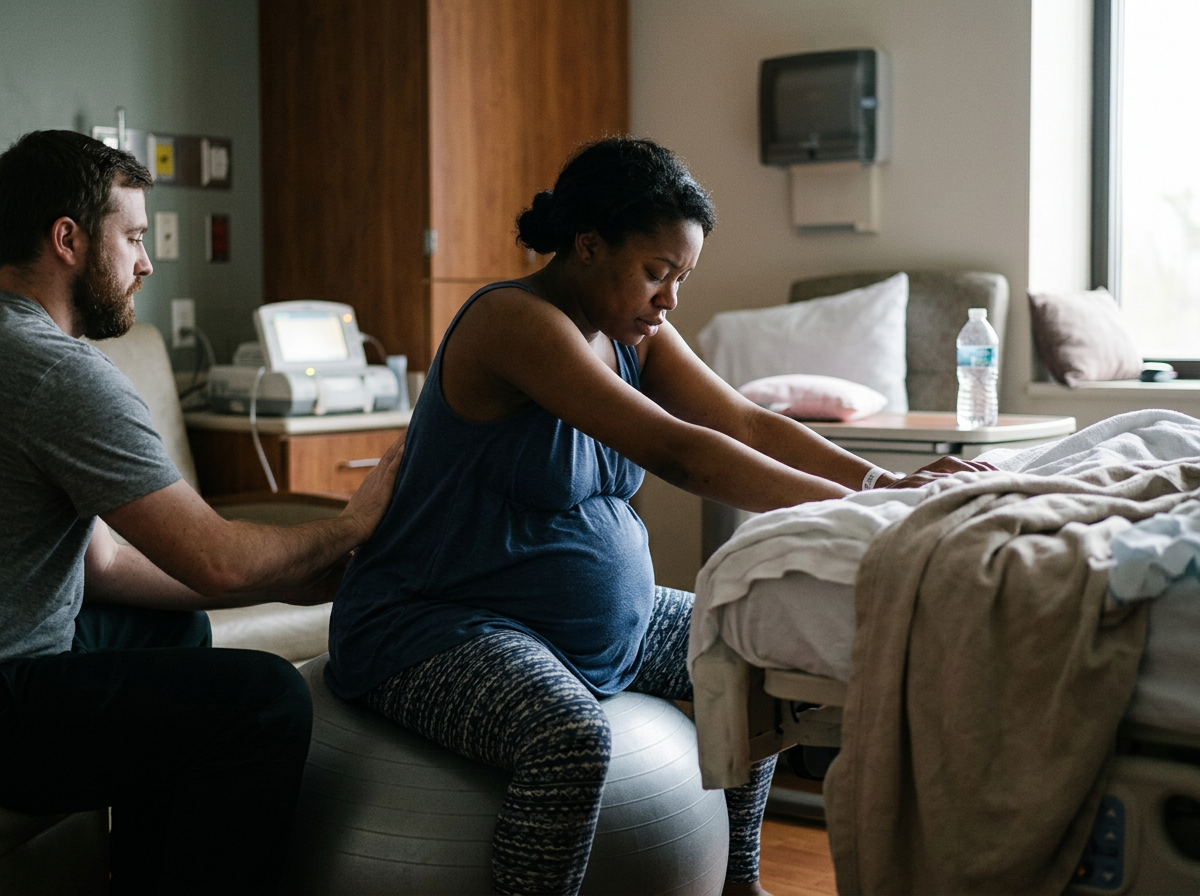
Labor positioning
Mobility during labor
Pelvic mobility
Hip mobility
Squatting and supported positions
Birth positions
Pushing strategies
Understanding pelvic floor anatomy
Perineal preparation
Partner education
Comfort measures
Movement strategies for labor
Labor and birth positioning
Your position can influence how your body moves during labor.
There is no single “best” position for every person or every birth. Learning a variety of positions before labor can help you feel more comfortable and confident changing positions during labor.
Hands and knees
Side-lying
Supported squat
Standing
Kneeling
Lunging
Using a birth ball
Positions for comfort and mobility
Your birth preferences and medical circumstances will guide which positions are appropriate for you.
Preparing for vaginal birth
Understanding your pelvic floor can help you feel more prepared.
A vaginal birth requires the pelvic floor and surrounding tissues to accommodate significant changes. During pregnancy, we can work on pelvic floor awareness, relaxation, mobility, breathing, positioning, and strategies that may help you feel more prepared for the physical demands of delivery.
Preparing for C-section
Pelvic health preparation isn't only for vaginal birth.
If you are planning or expecting a cesarean birth, physical therapy can still help you prepare for pregnancy and postpartum recovery.
Education may include breathing, abdominal and pelvic floor coordination, positioning, mobility, body mechanics, and strategies for getting in and out of bed and caring for your baby after surgery.
What about the pelvic floor after birth?
Pregnancy and childbirth can affect the pelvic floor regardless of how you deliver. Preparing before birth can help you understand what to expect during recovery and recognize when additional support may be helpful.
Your recovery doesn't end when your baby is born.
:
Learn more about Postpartum Pelvic Health →
What happens during a pregnancy & birth preparation evaluation?
We start with your goals.
I will ask about your pregnancy, previous pregnancies and deliveries, current symptoms, activity level, birth preferences, and any concerns you have about labor or recovery.
We assess your whole body.
Depending on your needs, your evaluation may include your posture, breathing, spine, pelvis, hips, abdominal wall, strength, mobility, and pelvic floor function.
We prepare you for birth.
Your treatment may include education, exercises, breathing strategies, pelvic floor relaxation, mobility, positioning, and individualized strategies for labor and postpartum recovery.
When should I schedule a pregnancy pelvic floor evaluation?
You can schedule a pelvic health physical therapy evaluation at any point during pregnancy. Earlier visits can provide more time to address symptoms, build strength and mobility, learn pelvic floor relaxation, and prepare for birth.
However, it's never too late to prepare. Even if you are well into your pregnancy, we can focus on strategies that are appropriate for where you are now.
First trimester: establish a baseline and address early symptoms
Second trimester: address changing body mechanics and build your birth-preparation toolkit
Third trimester: focus on labor positions, pelvic floor relaxation, breathing, pushing strategies, and postpartum preparation