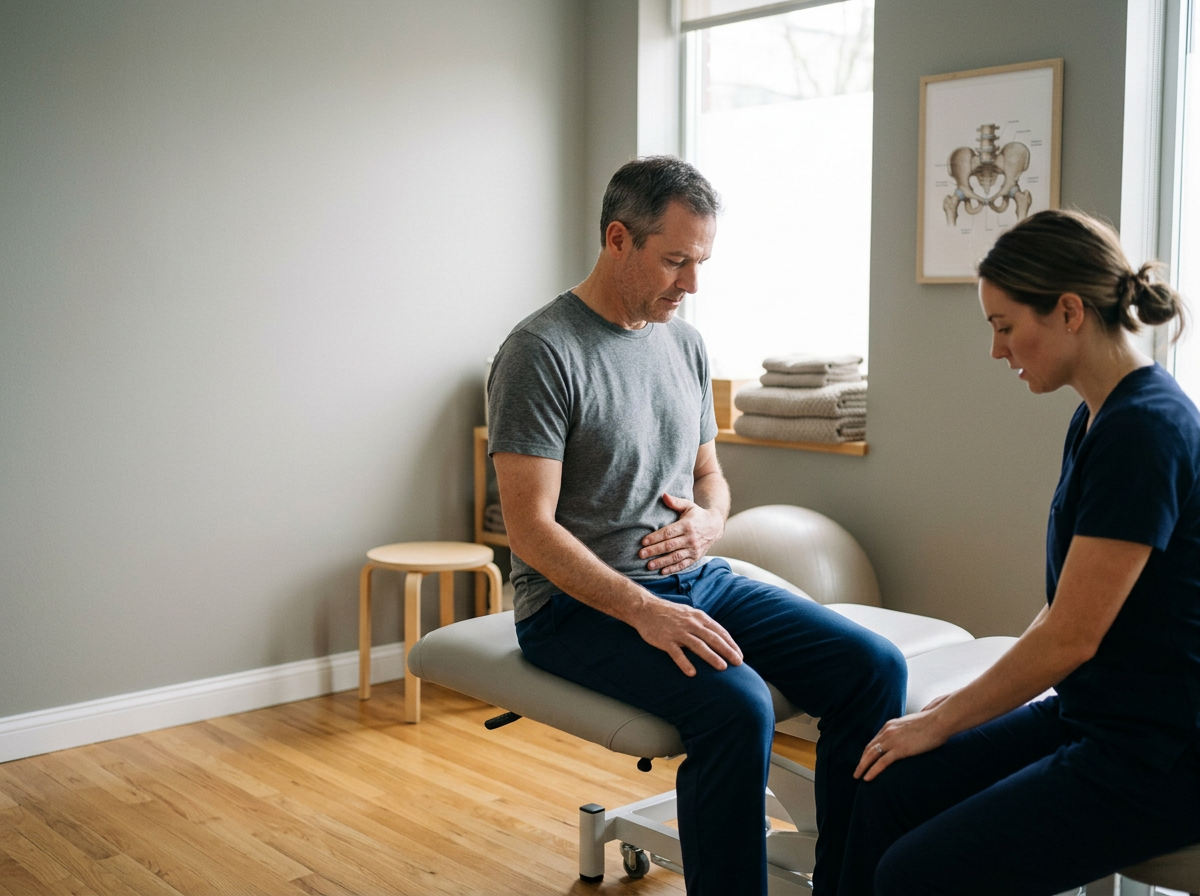
Men’s Pelvic Health
Pelvic health concerns can affect men of all ages and can impact urination, bowel function, sexual health, exercise, and everyday activities. These symptoms are common, but they are not something you simply have to live with.
At Core Pelvic Health & Wellness, I provide confidential, individualized pelvic health physical therapy to help men better understand their symptoms, identify contributing factors, and work toward improved function and quality of life.
What is men’s pelvic health?
The pelvic floor is a group of muscles that supports the pelvic organs and plays an important role in bladder and bowel control, sexual function, core stability, and pressure management.
When these muscles are weak, overly tense, painful, or poorly coordinated, they can contribute to a variety of symptoms.
Pelvic health physical therapy looks beyond the pelvic floor alone. The hips, pelvis, low back, abdomen, breathing, posture, nerves, and overall movement system can all influence pelvic health.
What can men’s pelvic floor PT help with?
You may benefit from pelvic health physical therapy if you experience:
Urinary symptoms
Urinary leakage
Urinary urgency
Urinary frequency
Difficulty starting urination
Difficulty emptying your bladder
Post-void dribbling
Urinary symptoms following prostate surgery
Pelvic pain
Pelvic pain
Perineal pain
Penile pain
Testicular or scrotal pain
Groin pain
Tailbone pain
Pain with sitting
Low-back or hip pain associated with pelvic symptoms
Sexual health concerns
Pain with sexual activity
Pain with ejaculation
Pain after ejaculation
Erectile dysfunction when musculoskeletal or pelvic floor factors may contribute
Difficulty coordinating pelvic floor muscles during sexual activity
Bowel symptoms
Constipation
Difficulty emptying the bowels
Excessive straining
Fecal urgency
Bowel leakage
Common conditions
Men’s pelvic health physical therapy may be appropriate for:
Chronic pelvic pain
Chronic pelvic pain syndrome
Prostatitis/chronic prostatitis
Pelvic floor muscle dysfunction
Pelvic floor muscle overactivity
Urinary incontinence
Urinary urgency and frequency
Post-prostatectomy urinary incontinence
Erectile dysfunction when pelvic floor or musculoskeletal factors may contribute
Painful ejaculation
Testicular/scrotal pain
Penile pain
Pudendal neuralgia
Coccyx/tailbone pain
Constipation and defecatory dysfunction
Fecal incontinence
Prostate surgery & prostate cancer recovery
Preparing for and recovering from prostate surgery
Pelvic health physical therapy can be an important part of recovery following prostate surgery. Treatment may address urinary leakage, pelvic floor muscle coordination, breathing, core function, and return to daily activities.
Before surgery
If you are preparing for prostate surgery, a preoperative pelvic floor evaluation can help you understand your pelvic floor and learn how to properly contract and relax these muscles before surgery.
After surgery
Treatment may include:
Pelvic floor muscle training
Coordination and relaxation
Bladder control strategies
Pressure management
Core rehabilitation
Return to exercise
Functional movement
Education regarding recovery
Chronic pelvic pain in men
Pelvic pain doesn't always come from the prostate.
Men with chronic pelvic pain may experience symptoms in the pelvis, perineum, penis, testicles, abdomen, hips, tailbone, or low back. Pain may also be associated with urination, bowel movements, sitting, exercise, or sexual activity.
The pelvic floor muscles can become tense or overactive in response to pain, stress, injury, or other conditions. This can sometimes create a cycle of muscle tension and ongoing symptoms.
Treatment focuses on identifying the factors contributing to your symptoms rather than simply treating the location of your pain.
Sexual health
Pelvic health and sexual function are connected.
The pelvic floor muscles contribute to sexual function, including erection, ejaculation, orgasm, and control of pelvic pressure. Pelvic floor muscle tension, weakness, pain, or poor coordination may contribute to sexual symptoms in some men.
Physical therapy may address:
Pelvic floor muscle coordination
Pelvic floor relaxation
Pelvic pain
Pain with ejaculation
Pain following ejaculation
Musculoskeletal contributors to erectile dysfunction
Hip and pelvic mobility
Breathing and pressure management
Core and pelvic floor coordination
Sexual health concerns can have many causes. Pelvic health physical therapy may be one component of a comprehensive approach and may be coordinated with medical care when appropriate.
My whole-body approach
The pelvic floor doesn't work in isolation.
Your pelvic floor works together with your abdomen, diaphragm, spine, hips, and pelvis. Problems in one area can influence another.
My orthopedic background allows me to look at the entire movement system rather than focusing exclusively on the pelvic floor.
Breathing ↔ Core ↔ Pelvic Floor ↔ Hips ↔ Spine ↔ Movement
What happens during your evaluation?
A confidential conversation
I begin by discussing your symptoms, medical history, activity level, goals, and concerns. I understand that talking about urinary, bowel, or sexual health can feel uncomfortable, and I strive to create a respectful, judgment-free environment.
A comprehensive evaluation
Depending on your symptoms, I may assess:
Posture
Breathing
Spine
Hips
Pelvis
Abdominal wall
Core function
Strength
Mobility
Pelvic floor function
Will I need an internal examination?
Not necessarily. An internal pelvic floor examination is not automatically required. Depending on your symptoms and goals, an external assessment may provide useful information.
If an internal examination is recommended, I will explain why it may be helpful and discuss it with you beforehand. You are always in control of your care.